We loved each and every one of the 418 Grand Staircase balusters – even the ones that are broken or missing.
The word baluster was coined in 17th-century Italy and comes from the Latin balausta (wild pomegranate flower). The curved shape of balusters resembles a half-opened pomegranate blossom.
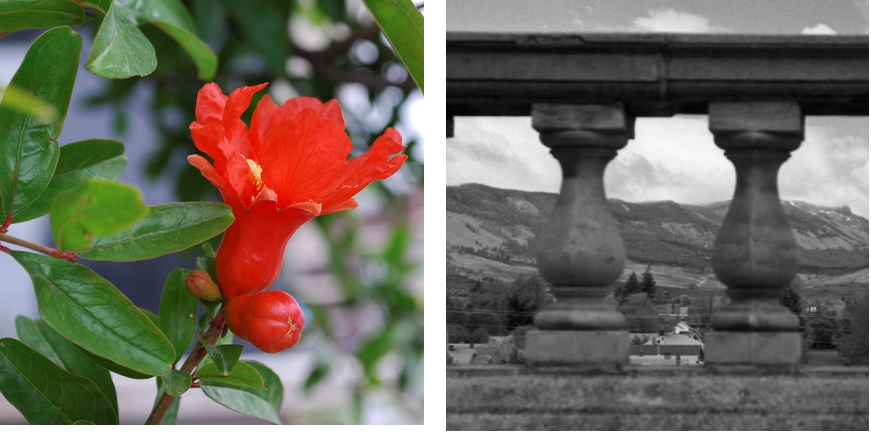
Made of cast stone, the staircase balusters were created using a dry tamp process – two layers with an inner concrete core and a more refined outer finish. It was that finish layer – a rosy beige fine grain aggregate mixed with quartz – that changed color with the light and time of day and created a marble-like appearance, and sometimes gave the balusters a pinkish hue.
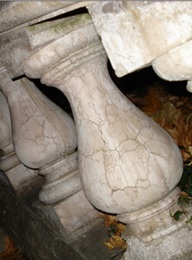
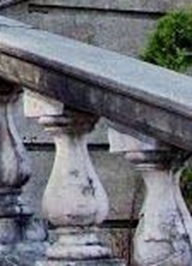
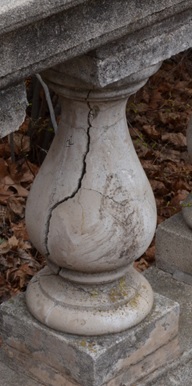
Not all the balusters were alike. There were straight balusters, angled balusters, and some with a curved angle. Each served a different purpose. 148 were horizontal, 212 were angled, and 58 were curved.
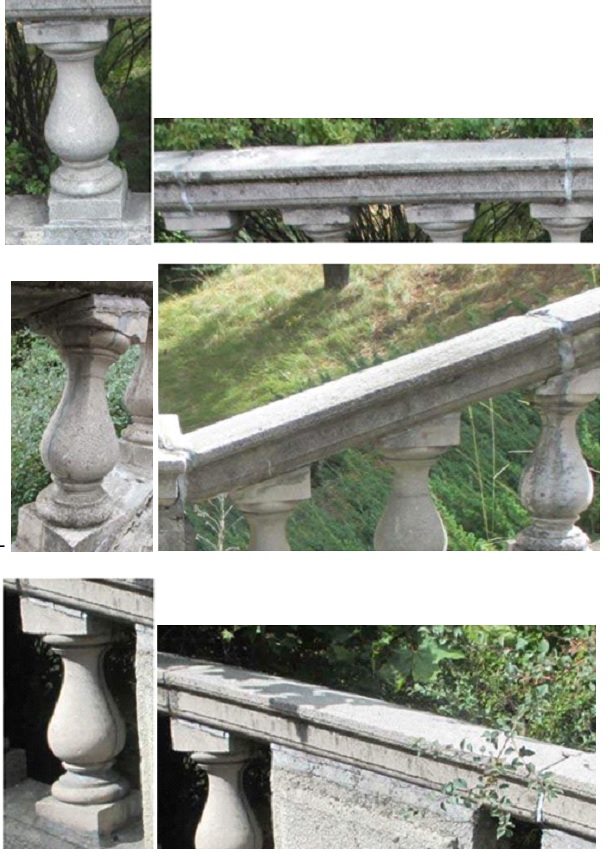
You also may have heard the word balustrade. What is the difference between balusters and balustrades? A baluster is a single post. A balustrade is several balusters connected together to form a decorative railing.
 Friends of the Grand Staircase